test
A Publication of RenewaNation: Helping Children Develop a Biblical Worldview.

To Link To The RenewaNation Website


Friday, June 27, 2014

Great Summer Reading


Before I take my customary break from blogging, I have some great summer reading to recommend.

First: Dr. Erik Strandness’s delightful new book, The Director's Cut: Finding God's Screenplay on the Cutting Room Floor. 


You don't find many medical doctors with degrees in theology. 

After practicing neonatal medicine for twenty years, Dr. Strandness went back to school to study theology, and he obtained a master’s degree in that field. This turn in his journey, and the book that ensued, was born out of his loss for words when someone asked him why he was a Believer. 

Once in a while, someone manages to put ageless Truth into such a fresh package that it cries out, "Read on!" That’s just the way I felt while reading The Director's Cut. It's not just Dr. Strandness’s engaging word images that make this book such a great read, but the profound Truths communicated in such a creative and thoroughly enjoyable manner. It's a fun read! 

I got to know Erik when he was part of the Colson Centurions Affiliate Program in Seattle, and I can tell you he is "the real deal."  Today, Erik is teaching science, religion and history at a Classical Christian school in Spokane, Washington. To learn more about Erik's move from medicine to theology, click here. To learn more about why Erik wrote the book, what it is about, and how you can obtain a copy, click here.

Next, I recommend Henry's Glory: A Story for Discovering Lasting Significance in Your Daily Work, by John Elton Pletcher.

John Pletcher is a pastor who gets theology of work. His book is unique in that it deals with this topic in the form of fictional story. Jesus used parables to communicate Truth to the masses, and great Christian writers of the past, such as John Milton and C.S. Lewis, used this technique with success.

Pletcher follows the story-telling tradition by skillfully weaving Truth into a contemporary narrative about Zach, Maggie, and a classic old pickup truck named "Henry." But don't let the story-form fool you. His treatment of theology of work is not superficial, by any stretch of the imagination. Pastor Pletcher engages with big issues, including eschatology and platonic dualism, and does so with excellence, in a winsome way!

To read a review of Henry's Glory that appeared in The Marketplace magazine, click here. To obtain a copy of John's book, click here.

Happy reading!

I'll see you in September.

Henry's Glory makes a great family read, suitable for ages 9 to 99.


Bookmark and Share

Friday, June 20, 2014

He Bettered The Condition Of A Nation


Jesus identified the two most important commandments: "Love the Lord your God, with all your heart, with all your soul, and with all your mind,” and, "Love your neighbor as much as you love yourself.”

What greater motivation can there be for our daily work? Loving God and loving people. It's pretty basic.

Through some vocations, people love others directly, as in the work of a nurse. Through other vocations, people love others indirectly, as in the work of a truck driver who delivers supplies that empower the nurse to nurse.  

Through his work as a botanist, chemist, professor, and entrepreneur, Dr. George Washington Carver loved God and loved people. If there ever was a person who combined Weslian-Haugian faith with a Moravian-Haugian approach to the marketplace, it was Carver.

Carver asked God to give him “orders for the day” during morning walks. And Carver continued to commune with God throughout the day, particularly in his lab at Tuskegee Institute, where he created new products from peanuts, sweet potatoes and soybeans. Not for his own glory, but for the common good and human flourishing to the glory of God.

Carver said: “God is going to reveal to us things He never revealed before if we put our hands in His. No books ever go into my laboratory. The thing I am to do and the way of doing it are revealed to me. The method is revealed to me the moment I am inspired to create something new. Without God to draw aside the curtain I would be helpless.”

Carver’s love for humanity shaped his work at Tuskegee. He came to Tuskegee in response to Booker T. Washington's invitation: "I cannot offer you money, position or fame...I offer you in their place work─hard work─the challenge of bringing people from degradation, poverty and waste to full manhood." Carver replied: "I shall be glad to cooperate with you in doing all I can through Christ who strengtheneth me to better the condition of our people."

He did just that! And in the process, he bettered the condition of a nation.

Of all the video clips Worldview Matters has produced, none has generated more hits than the following clip about Carver, nearing 10,000 views. Find out why:


If the video does not play, click here: http://youtu.be/1wv4qYIyJoM


Bookmark and Share

Friday, June 13, 2014

China Is The Unlikely Evidence

Today's guest post is from Darrow Miller and Friends, written by Gary Brumbelow, reprinted by permission. Gary provides a fitting capstone for my five-month series on how Christianity has positively affected nations where followers of Christ have practiced wholistic faith. We would be remiss if we omitted one country most people would least expect: China.    

China is poised to pass the US later this year as the world's #1 nation in terms of real GDP at purchasing power parity, according to the Financial Times.

In 1872, the United States beat out the UK to become the world’s #1 economic power. But that 142-year supremacy is about to end. Forecasters now believe China will move into the top spot later this year, four years ahead of the earlier prediction of 2019. That’s the story reported in Financial Times, “on the basis of new figures published today by the world’s leading statistical agencies.”

Rest assured you’ll be hearing more about that story. Here’s what may not get as much press.
Peter Cai, writing in China Spectator, recently reported that three Chinese professors—Yuyu Chen, Se Yan and Hui Wang—make the case that that there’s a connection between Christian missionary work and Chinese economic growth. Here are some excerpts from his article, “Jesus and the Chinese Economic Miracle.”
·         “In a nutshell, Protestant missionaries helped to build China’s human and social capital before Mao took over in 1949. These cultivated values and capital endured even through Mao’s mad reign and have been put to good use again after China opened itself to the world again.”

·         “The Peking university scholars’ argument does not deny the importance of the historic change unleashed by Deng and his followers but they point to another element of the story -- the crucial role played by the protestant missionaries in spreading Western science, technology and social values in China.”

·         “A lot of China’s best education institutions including Peking University can trace their origins to missionary schools in the 19th and 20th centuries. … graduates from missionary schools went on to become much-needed professionals in China such as engineers, doctors, teachers and other professionals."

As we have quoted elsewhere, David Aikman, in Jesus in Beijing, wrote a decade ago about Chinese scientists who visited the US who recognized that “in the past twenty years, we have realized that the heart of your culture is your religion: Christianity. That is why the West is so powerful. The Christian moral foundation of social and cultural life was what made possible the emergence of capitalism and then the successful transition to democratic politics."

The Bible affirms God as Creator and man as steward. The Cultural Mandate, which spurred the blessing of Western nations where Judeo-Christian virtues have been honored, does not belong to the West! The gospel is supposed to change nations. China is the unlikely evidence that it does!

To read Gary's complete post, click here. 

Also note this: China to have the World's Largest Population of Christians by 2025.

For more on the Financial Times report: 


If the video does not play, click here.


Bookmark and Share

Friday, June 6, 2014

The Quintessential Silent Partner

Noah Webster, in his Preface to the Dictionary of 1828, wrote: "In my view, the Christian religion is the most important and one of the first things in which all children, under a free government out to be instructed...No truth is more evident to my mind than that the Christian religion must be the basis of any government intended to secure the rights and privileges of a free people."
In his Value of the Bible and Excellence of the Christian Religion (1834), Webster declared: "Men may devise and adopt new forms of government, they may amend old forms, repair breaches, and punish violators of the constitution, but there is, there can be, no effectual remedy, but obedience to the divine law," and in a letter to James Madison (1829), he maintained: "...the christian [sic] religion, in its purity, is the basis or rather the source of all genuine freedom in government."  [1833 portrait by James Herring, National Portrait Gallery, Washington, D.C.]

For Noah Webster ["Schoolmaster of the Republic"], and other beneficiaries of the Reformation that grew out of northern Europe, liberty was built upon a foundation of self-government under God. This remarkable and revolutionary concept of freedom provided hope that a Constitutional Republic might work. At least it provided hope for those sharing Webster's convictions. Christianity was the quintessential silent partner: it provided the needed moral capital, yet did not force control.

Here's the catch: No state can mandate self-government under God, yet only people who practice self-government under God can build and maintain a truly free society. Democracy in and of itself is no brass ring. Hitler came to power through democracy. If 50.1% of voting Americans reject Truth, our system will produce outcomes as bad as any godless despot. If government by one Truth-rejecter is ruinous, imagine what government by millions will do. We're watching it now.    

Daniel Webster, Secretary of State under three presidents, summed it up this way: “Our ancestors established their system of government on morality and religious sentiment. Moral habits, they believed, cannot safely be trusted on any other foundation than religious principle, nor any government be secure which is not supported by moral habits. Living under the heavenly light of revelation, they hoped to find all the social dispositions, all the duties which men owe to each other and to society, enforced and performed. Whatever makes men good Christians makes them good citizens.”

Both Websters would be castigated by Christophobics today.  

Another high office-bearer declared: "America became the common meeting-place of all those streams of people, great and small, who were undertaking to deliver themselves from all kinds of despotism and servitude, and to establish institutions of self-government and freedom...It was the principle of personal judgment in matters of religion for which the English and Dutch were contending, and which set the common people to reading the Bible. There came to them a new vision of the importance of the individual which brought him into direct contact with the Creator. It was this conception applied to affairs of government that made the people sovereign…The logical result of this was the free man, educated in a free school, exercising a free conscience, maintaining a free government. The basis of it all, historically and logically, is religious belief.

These are the fundamental principles on which American institutions rest…”

Calvin Coolidge, our 30th President, said this. 

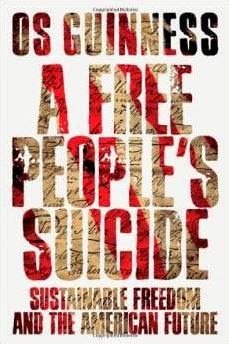
Were the views of Americans quoted above mere opinions of eccentric and marginal voices? Not according to French historian Alexis De Tocqueville. In Democracy in America (1835/40), De Tocqueville observed: "...in America, religion is the road to knowledge, and the observance of the divine laws leads man to civil freedom." In our present day, Anglo-Irish cultural critic Os Guinness concludes: "Americans today are heedlessly pursuing a vision of freedom that is short-lived and suicidal. Once again, freedom without virtue, leadership without character, business without trust, law without customs, education without meaning and medicine, science and technology without human considerations can end only in disaster."  In A Free People's Suicide, Guinness declares: "...the ultimate threat to the American republic will be Americans. The problem is not wolves at the door but termites in the floor."  


Bookmark and Share

Friday, May 30, 2014

Either By The Bible, Or By The Bayonet


Robert C. Winthrop (1809 - 1894), a descendant of John Winthrop, served as the 22nd Speaker of the United States House of Representatives. [Photo public domain, US Congress Biographical Directory. Oil on canvas by Daniel Huntington, 1882.]

"In any society, only two forces can hold the sinful nature in check: the restraint of conscience or the restraint of the sword. The less that citizens have of the former, the more the state must employ the latter.”

This observation was made by Chuck Colson and Nancy Pearcey, in their 1999 bestseller, How Now Shall We Live.

In 1852, Robert Winthrop, 22nd Speaker of the House of Representatives, was more pointed: "Men, in a word, must necessarily be controlled either by a power within them, or by a power without them; either by the Word of God, or by the strong arm of man, either by the Bible, or by the bayonet."

In the early days of our nation, "self-government under God” defined liberty among Christian leaders such as John Winthrop and Robert Winthrop. But the current American notion of "liberty" idolizes the self-government part, while the under God part is under the bus. 

The greatest deterrent to human liberty is independence itself. Independence from the God of the Bible, that is. As we move further away from personal recognition of Higher Law, and accountability to The Higher Judge, the less liberty we all have. That's because the more citizens who lack internal control under God, the more calls there will be for external control─under man. And this is not a pleasant prospect. For who will govern our controllers? What will guide their minds and hearts? The Bible?

As external controls increase in number, no amount of legislation will solve the root problem. That's because our problem is internal. Yes, we need God-honoring legislation. But authentic, sustainable liberty within the halls of power, the public square, the marketplace, and the home, must be voluntarily carried into these places by individual players who are controlled by a power within them. We need politicians, plumbers and parents who willingly (and gladly) carry their respect for God and His authority within them wherever they go. This starts with a relationship.

Ken Eldred put it this way, in God Is At Work:

"Cultural change is not something that can be imposed at the macro level from the top...Person by person, hearts and minds must be transformed...In short, it is the Holy Spirit working a cultural transformation from the pattern of this world to the pattern of God. The process starts with...a personal relationship with God.”

A Moravian-Haugian marketplace begs a Weslian-Haugian awakening.


Bookmark and Share

Friday, May 23, 2014

Titanic


Indian scholar Vishal Mangalwadi contends that the "secret" of the West's success is morality that allows people to trust one another with the kind of trust essential to business and politics. He says this kind of trust-producing morality is unique to societies having a belief in a rational God who has spoken to humanity through the Bible, clarified right and wrong, and to Whom everyone is equally accountable.

But Mangalwadi asks an important question: "If moral integrity is foundational to prosperity, why don't secular experts talk about it?"

His answer is: "Economists have lost the secret of the West's success because philosophers have lost the very idea of truth." How did this happen? "The truth was lost," he says, "because of an intellectual arrogance that rejected divine revelation and tried to discover truth with the human mind alone."

Mangalwadi traces the connections between failing economies and faulty worldviews. His book Truth and Transformation is particularly relevant because of the West's exchange of the Christian worldview for a much different view. A view that is as harmful to the economy of America as Hinduism is to the economy of India. Namely, the worldview of Secularism.

Through the philosophy of Western secularists such as David Hume (1711-1776), Friedrich Nietzsche (1844-1900) and Martin Heidegger (1889-1976), thought-leaders in the West accepted the notion that either the God of the Bible does not exist, or He is totally irrelevant. (One doesn't have to be an atheist to be a secularist. A Christian dualist is a practicing secularist.)

The effects of Secularism upon America have been titanic. Mangalwadi contends that Secularism is leading us down the same road to poverty that Hinduism led India.

Think it could never happen? The Titanic was thought to be unsinkable, too.

Presidents John F. Kennedy and Ronald Reagan both quoted John Winthrop, CEO of the Massachusetts Bay Company, who once declared: "...we shall be as a city upon a hill−the eyes of all people are upon us."

But they neglected to tell the American people what Winthrop said next: "So that if we shall deal falsely with our God in this work we have undertaken, and so cause Him to withdraw His present help from us, we shall be made a story and a by-word through the world. We shall open the mouths of enemies to speak evil of the ways of God, and all professors for God's sake." 

John Winthrop (1588-1649) [Photo public domain; artist unknown.]


Bookmark and Share

Friday, May 16, 2014

The Two Most Critical Words Missing From American Vocabulary Today


In Truth and Transformation, Vishal Mangalwadi relates an experience he had in Amsterdam, where he wanted to buy a bus day-pass from a machine. The instructions were in Dutch. Two young women visiting from America were nearby, and Mangalwadi asked how to get tickets. The women said they had been riding around Amsterdam for a week, and no one checked for tickets. "Why do you want to get tickets?" they asked.

Mangalwadi relates: "Their shamelessness shocked me more than their immorality. They represented the new generation, liberated from 'arbitrary' and 'oppressive' religious ideas of right and wrong. University education had freed them from commandments such as 'You shall not steal.'"

He goes on: "'It is wonderful,' I said to them, 'that there are enough commuters who pay so that the system can carry some who don't. Once your schools succeed in producing enough clever commuters, your country will catch up with mine [India]. You will have to have ticket inspectors on every bus and have super-inspectors to spy on the inspectors. Everyone will then have to pay more. But corruption won't remain confined to the consumers; it is a cancer that will infect politicians, bureaucrats, managers, operators, and the maintenance staff...Soon your public transport will resemble ours: frequent breakdowns will slow down not only the transport system but also your roads, efficiency and economy.'"

Mangalwadi says morality is the "floundering secret" of the West's success. Our economic system rests upon trust that people will pay, and not misappropriate funds, bribe or extort. Without this trust, economic [and political] systems become cumbersome, expensive and fatally flawed.  

"Where did this morality come from?" asks Mangalwadi. "Why isn't my society equally trustworthy?"

The answer is: The kind of trust which allowed the West to become so extraordinarily successful, was the fruit of a Christian consensus which assumed a living, omnipotent Judge sat above all, knew all, and held all people equally accountable to His benevolent Code of Conduct. Living in accordance with that Higher Law was right, and flouting it was wrong. In fact, at one time, the Judge and His Code provided meaning itself for the two most critical words missing from American vocabulary today: right and wrong.

Now that the Judge and His Word are non-factors in Western morality, we can expect to see more citizens like the two Americans Mangalwadi encountered in the Netherlands.


Bookmark and Share

P.S. on a much lighter note: I received more comments last week about our son Rodney (including off-line comments) than I typically receive in regard to my blog posts. OK. Fine. Below are some photos from yesterday's fishing trip with Rod and his friend David, our delightful house-mate. No, I don't spend all my time fishing with these important guys, but this is what 'right' looks like in my real-time world. (Jesus spent a fair amount of time in fishing boats, too.)

You may enlarge this photo by clicking it once. It's worth the view!


Here's Rod showing off the catch of the day to his "Opa," my Dad, who lives with us. Dad turns 91 in July, and has many fishing trips under his belt. Thanks, Dad, for passing your skills on to the second and third generation! It certainly paid off at dinner last night, didn't it?


Friday, May 9, 2014

Pay The Bear


[This post first appeared on October 7, 2011.]

My wife and I got out of town to go camping with our "special needs" adult son, Rodney, and his friend David. We drove two hours out of Seattle into the Cascade mountains, and pitched our tents at Fish Lake.

Needing wood for our campfire, I noticed the campground was selling bundles for $5. But I recalled seeing a sign just off the main highway as we turned toward the lake, advertising firewood for 20% less. Passing this location on our way back from a side-trip, we stopped to purchase firewood there.

As we pulled into the orderly establishment, we noticed large, beautiful wood carvings for sale, all out in the open, with no one around. I saw a pile of wood, and drove toward it. Here we found a carved bear with a jar atop its head. The jar had “Firewood $4.00” written on it, and a sign at the bear’s feet read, Pay The Bear. No one was present to receive our payment.

I helped myself to a bundle of wood, and "paid the bear." As I did, I found the jar was full of money. Hard cash. Currency. Full! I paid for my purchase with a sense of wonderment, and a heart of thanks for economic and civil visionaries such as William Bradford, who brought something with them across the Atlantic more valuable than gold: a basis for the kind of trust, moral integrity, and self-government that allows such scenes to still occur in rural America−and enables business to work its best.  

I couldn't help but think of a similar experience of Vishal Mangalwadi. In the opening chapter of his book, Truth and Transformation, he tells of his first trip to the Netherlands, where his host said, “Come, let’s go get some milk.” They walked to a nearby dairy farm and entered the milk room, where no one was present. Mangalwadi’s host filled his jug with milk, then took down a bowl full of cash from a windowsill, put twenty guilders into the bowl, took some change, put the bowl back, and started walking away.

“I was stunned,” Mangalwadi wrote. "Man," I said to him, “if you were an Indian, you would take the milk and the money.”

Then Mangalwadi posits: "Where did this morality come from? Why isn’t my society equally trustworthy?”

I'll share Mangalwadi's answer to his own question next week.


Bookmark and Share


Allow me to introduce my remarkable son Rodney, one of God's great gifts to the world. He is the youngest of our four adult children, turning 36 in July. All of our kids are remarkable, of course! But Rodney is very unique. Space does not permit me to expound upon this now.

Rod loves sports. Always prepared to catch a fly ball. Go Seattle Mariners! 

Rodney gave his Mother this lion puppet for her birthday, to use when she teaches his adults-with-special-needs Sunday School class at his church once a month. He also got her a lamb to go with the lion. (A very theologically astute guy!)
Success at Fish Lake! What an awesome fisherman he is. (You gotta love that look in Rod's eyes...)
Rodney with his friend David, warming up around the campfire, thanks to "the bear"−and William Bradford.

Friday, May 2, 2014

Because They Believed In A Different God


"The West is like a computer from which the anti-virus program, the gospel, has been uninstalled," writes Vishal Mangalwadi in Truth and Transformation.

Mangalwadi understands first hand the significance of such an "un-installation." His country, India, experienced the benefits of what William Wilberforce called "real Christianity" for about 150 years. But when the "anti-virus program" was removed, negative consequences for India were deep and far-reaching.

When British rule in Bengal began in 1757, governmental leaders took bribes, and corruption was rampant. [Remember Merry Olde England?] The British East India Company came to India to make money, but not the Moravian-Haugian way. They had neither the mindset of a Moravian, nor the heart of Hauge, and therefore could not carry those views of business into the workplace. British corruption, Mangalwadi relates, "destroyed Bengal's economy and became a factor in the death of several million people in the famine of 1769-70."

But then something remarkable happened. The Wesleyan revival took hold in England. Converted British leaders like Wilberforce saw Christianity as something more than a private, personal religion. They saw "real Christianity" having enormous implications for the whole of society.

"Following the Wesleyan revival in England," writes Mangalwadi, "the British evangelicals transformed their government in India." Charles Grant, in the 1770s and early 80s, campaigned to give India "a philosophical basis for moral absolutes....via evangelization." 

"During the nineteenth century," writes Mangalwadi, "British evangelicals succeeded in transforming England and their government in India because they believed in a different God. Their God used his power not to oppress and extort, but to serve..."

The effect of this belief was a significant transformation of Indian government and business. So much so, Mangalwadi relates, that in 1947, "independent India and Pakistan received clean, although not perfect, administrations."

But after Independence in 1947, things changed. Why? Because the "real Christianity" of Wesley and Wilberforce, which had provided a motivation for Brits like Charles Grant and William Carey in 18th-19th Century India, was "un-installed" in the 20th. While Wilberforce's "real Christianity" had a profound effect on India for more than a century, "in the last sixty years," notes Managlwadi, "corruption has grown exponentially."

Mangalwadi understands what is really at stake with the un-installation of "real Christianity" in the United States. Things that previous generations considered unthinkable are actually happening today because subsequent generations have believed in different gods.

In 1998, Christianity Today referred to Vishal Mangalwadi as, "India's foremost Christian intellectual." He has a critically important message for the West today, as only someone from the East can say it. Read Truth and Transformation: A Manifesto for Ailing Nations. Then read his other great work, The Book that Made Your World: How the Bible Created the Soul of Western Civilization. Awesome stuff. Truly awesome.


Bookmark and Share

Friday, April 25, 2014

Contextualizing Truth In The Workplace


Hans Nielsen Hauge, the 19th Century Norwegian evangelist-entrepreneur who preached throughout Norway and started businesses, taught about "living faith" at a time when the state Church in Norway was teaching something less.

Hauge was not an ordained pastor, and any religious assembly without a state-authorized minister present was unlawful. Hauge was imprisoned no less than 14 times. He spent 9 years in confinement, including one stint without seeing sunlight for nearly 4 years. Yet in spite of the resistance he met from Church leaders, Hauge encouraged his "Society of Friends" to remain in the state Church, because he believed the Church was the foundation of the nation.

Hauge wrote 33 books over 18 years. It is estimated that 100,000 Norwegians read one or more of his books when only about 900,000 in the entire country were literate. To say Hauge had a profound influence upon the spiritual life of Norway in his day is an understatement.

But Hauge had a profound influence on the material life of Norway, too. Hans loved God and loved people. Through the creation of profit-producing businesses, and the jobs that went with them, Hague mitigated poverty. After establishing new businesses, he delegated the management to capable others. Hauge helped his fellow Norwegians to see the altruistic possibilities of a biblically-informed approach to entrepreneurialism.

On February 27, 1809, civil authorities released Hauge for six months during a five-year sentence so he could establish salt mines for the government that imprisoned him! He established five mines in those six months. (Let's just say this man was gifted.)

Hauge was compelled by a vision for the Kingdom. A vision for the Kingdom of God to "come" wherever Christ's will was done on earth. This included every part of earth, from the farm, to the factory, to the family. Hauge had a wholistic understanding of the Gospel, for sure, and he embraced the notion of profit-making for the common good, similar to the Moravians. He saw no "sacred-secular divide."

He also saw women as equals. Frances Sejersted, former president of the Nobel Peace Prize Committee, once declared: "The Hauge movement was a major contributing factor for developing democracy in Norway."

The Hauge Institute was founded in 2005 to raise awareness about Hauge's ethical practice and servant leadership. Click here for more about this extraordinary man and his indefatigable commitment to contextualizing Truth in the workplace. 


This painting, called Haugianerne, was created by Adolph Tidemand in 1852, some 28 years after the passing of Hauge. The scene depicts a meeting of The Society of Friends, which grew out of the life and teachings of Hans Nielsen Hauge. The Hauge Institute writes: "Societies of Friends were organised as the revival spread across the land.  They were sometimes called readers or students, because they studied the Holy Scriptures a great deal and were very knowledgeable.  They were also called Haugians.  Such Societies were registered all over the country; there must have been several thousand members altogether.  These groups met in their homes and spent much time together praying and teaching."


Bookmark and Share

Friday, April 18, 2014

Why Is Norway #1?


The 18th and 19th Century influence of Christianity upon the common good and human flourishing of modern nations is remarkable. No accounting of it would be complete without discussing Hans Nielsen Hauge's extraordinary influence upon Norway.

A few months ago, I highlighted 19th-Century missionary influences upon Korea, and I suggested this may have something to do with South Korea ranking #9 out of 187 nations in the United Nations Human Development Index. I also pointed out that Norway is #1. This may have surprised you. It did me. Until I learned some Norwegian history.

Why is Norway #1? Perhaps it's because on April 5, 1796, a young Norwegian, age 25, had a life-altering encounter with God while walking behind a plow, singing a hymn.

Am I stretching things? Those who know what happened after this encounter don't think so. The experience Hans Nielsen Hauge had that day was so overwhelming he couldn't describe the joy. It changed him forever. He was filled with the Spirit, and began telling others about the resurrected Lord. The rest is Norwegian history.

Hauge (1771-1824) had the evangelistic fervor of Wesley, combined with the business acumen of a Moravian−on steroids. He had a love for Scripture, to which he turned for answers, even when those answers challenged the state Church establishment. He did not remain silent when it came to Truth. Hauge was imprisoned numerous times for violating the Konventikkel Ordinance, which forbade preaching independently of the Church of Norway.

Hans traversed Norway, north and south, preaching and teaching. A spiritual awakening ensued. People who heard him wept. The lives of many Norwegians were transformed through a personal encounter with the living Christ, just as Hauge's own life had been transformed.

But Hans didn't just preach and teach. He knitted gloves and socks has he traveled on foot, giving them to the poor as he went. But more than this, Hauge started diverse businesses, creating many jobs throughout the land. Think of him as the "Johnny Appleseed of Norwegian Commerce." Hauge was instrumental in starting fishing industries, brick yards, shipping operations, salt mines and paper mills. "Haugians" all over Norway established shops, founded factories and began industrial projects. 

Hauge literally started a movement that was not only spiritual, but economic. "Haugianism," as it became known, had a significant influence upon the foundation of modern Norway.

More to come.

Hans Nielsen Hauge (1771-1824), has been called the "Apostle of Norway." 


Bookmark and Share

Friday, April 11, 2014

Most Deterrents To Lasting Achievement Are Internal


Last week we examined the horrifying reasons why the "Moravian experiment" among American Indians was short-lived. But not all Moravian settlements were wiped out by paranoid neighbors. Most deterrents to lasting achievement are internal.

18th Century Moravians were characterized by an unusual "spirit," when it came to business. Specifically, they possessed an uncommon attitude toward profits. Otto Uttendörfer described it as "the spirit of sacrifice and of being content with little for oneself while devoting much to the Lord's cause."

The Moravian purpose for profit-making was not individualistic. Personal prosperity was not the aim. Their focus was on the Kingdom of God and/for the common good. The well-being of the community as a whole, both spiritually and economically, was the goal (as in oikonomia). This necessitated not only preaching the Gospel and discipling believers, but creating worthy employment for the whole community, believers or not.

But an altruistic approach to profit-making cannot be imposed by law. Nor can it be generationally passed on by fiat. As more communities experienced the blessings of profit, more individuals came into those communities not sharing the Moravian "spirit of profit-making." Consequently, Bethlehem, Pennsylvania, today, is not the Bethlehem it once was.

William Danker, in Profit For the Lord, says the "General Economy" of early Bethlehem "died not of failure, but of success." He writes: "With rising prosperity, individual instincts to have, to hold, and to spend according to one's own desire reasserted themselves," and notes: "Religion became segregated from the realm of economics." [This is the sacred-secular divide Hobby-Lobby is challenging today.]

Danker quotes John Wesley with respect to the "curious inverse relation" between Christian faith and wealth: "For religion must of necessity produce both industry and frugality, and these cannot but produce riches. But as riches increase, so will pride, anger, and love of the world in all its branches."

Count Zinzendorf was not a "controller," out to establish "Zinzendorf-towns," or to build "The Kingdom of the Moravian Church." Zinzendorf was of a mind to have Moravians absorbed by other churches, and cooperating with other Christian groups for common Kingdom-of-God causes. This may account for the fact that the number of Moravian congregations is relatively small today. The largest concentration of congregations is in Tanzania, Africa.

For information about Moravian-rooted businesses in Antigua, Aruba, Curacao and Suriname (including Kersten, the oldest trading company in the Western Hemisphere), click here and here.

This is a screenshot of the home page for MCF Business Enterprises, B.V.,  headquartered in The Netherlands. It is the parent organization for Moravian-rooted business enterprises in Antigua, Aruba, Curacao, and Suriname today. MCF was established to maintain "a harmonious unity between Church and business." Link: here.
 
This screenshot is the homepage of Kersten, a diversified conglomerate of companies in Suriname and oldest trading company in the Western Hemisphere, founded in 1768 by Moravians. The 12 operating companies in this conglomerate today are all limited liability enterprises, with a total of 648 employees, as of the latest information provided by MCF above. Link: here.


Bookmark and Share

Friday, April 4, 2014

The Next Time You Drive Past A Native American Casino


How successful were the Moravians in helping American Indians start businesses? Today's Native Americans are famous for casinos in my state. What happened?  To answer, I must share something shameful I was not taught in US history class.

The Moravians were successful in establishing prosperous villages of Christian Indians. William Danker, in Profit For the Lord, describes one such Moravian Indian village, Friedenshütten, in Pennsylvania:

"The Indians lived in log houses with windows and chimneys like the homesteads of the settlers. The streets and alleys were kept scrupulously clean. In the center of the town stood the chapel with a school house as its wing. Behind the houses were fruitful gardens and orchards. Stretching down the river were cultivated fields and meadows. The converts had large herds of cattle and hogs, and poultry of every kind." 

These Christian Indians sold corn, maple sugar, butter, and dugout canoes made from white pine. Other Moravian Indian villages included Shekomeko in New York, Indian Pond on the Connecticut border, and Gnadenhütten in Ohio.

But during the Revolutionary War, the Christian Indians, along with Moravians, tried to preserve neutrality. They were suspected by both the British and the Americans as double-dealing. Indian war parties were hard to trace, but settled Christian Indians in villages were easy prey. They became scapegoats many American settlers wanted to eliminate.

Danker tells of 150 men from Pittsburgh moving against the village of Gnadenhütten: They "bound the peaceful inhabitants and murdered them two by two in two buildings they wantonly called 'slaughter houses.' White men, some of whom must have been baptized as Christians, scalped Christian Indians with biblical names who lived in white men's houses, wore white men's clothing, and used civilized utensils and tools in their homes and their work. Some of the Indians pleaded for their lives in fluent German and English. Yet the pitiless settlers spared not a single one." 

Six missionary assistants and their wives were butchered that day. In total, 96 defenseless people were scalped by whites: 28 men, 29 women, and 39 children. 

In time, all Moravian Indian villages came to an end. Danker concludes: "One cannot help wondering what the future of the Indian American and the future of Indian missions might have been if the Moravian experiment had not been choked in blood."

Think about this the next time you drive past a Native American casino.   

This mass grave mound of Christian Indians massacred at Gnadenhutten, Ohio, is listed in the National Register of Historic Places. The Indians' bodies were first piled in mission buildings by the killers, and then the village was burned down. No criminal charges were ever filed. Years later, a missionary by the name of John Heckewelder collected the remains, and buried them in this mound, just south of the old village site. Left click on the photo one time to enlarge it. What lies on the other side of the street is quite a contrast. [This photo is licensed under the Creative Commons Attribution 3.0 Unreported license. Attribution: Bwsmith84 at en.wikipedia.]
  Bookmark and Share

Friday, March 28, 2014

The First Modern Missionaries Created Profit-Producing Businesses


The first wave of Protestant missionaries in modern history was a surge of Moravians from Herrnut, Germany, in the 18th Century, under the leadership of Count Nicholas von Zinzendorf. Notable about these missionaries is the fact that they left Herrnut for far-off places with enough money to get them to where they were going, understanding they would not be receiving financial support from home. 

These pioneers of missions believed it was a missionary's duty and obligation to not only "preach the Lamb" that was slain for the salvation of souls, but to also help with the physical needs of those they evangelized. For Moravians, this meant provision of a livelihood. This provision was a big part of what it meant to truly love the people to whom they were sent. Many of these missionaries built spiritually and economically integrated communities similar to Herrnut, a town built by Moravians on property Count Zinzendorf had granted, where one out of every thirty-five residents was a shoemaker.

The first modern missionaries created profit-producing businesses. Lots of them. One New World community, Bethlehem, Pennsylvania, in 1761, had nearly 50 businesses in a town of 2,500. Not only did these businesses meet the financial needs of the missionaries themselves, who earned their living "as they went," but they provided much-needed employment for the people they came to evangelize and truly love.

Besides saving souls, Zinzendorf wanted to "teach the natives the dignity of labor," and to promote the welfare of needy people. In the process, Moravian missionaries worked daily in the marketplace beside neighbors who knew not Christ. What better place to be a living witness? (What a novel idea!)

The Moravians traveled to neglected and marginalized people. They seemed to specialize in the poor and exploited of the world. Slaves in Surinam. Eskimos. Indians in America. Among the many kinds of businesses established were: textile manufacturing, pottery-making, baking, and watch-making. In Labrador, the missionaries owned trading posts and cargo ships.

Zinzendorf disliked taking offerings, or appealing for aid. According to William J. Danker, author of Profit for the Lord, Zinaendorf's said reason for rejecting the collection-plate economy was because he did not think it was right to interfere [compete] with other Christian causes. But, clearly, there was more to his thinking.

For more on the Moravian theology of work and missions, I recommend William Danker's book:

In Profit for the Lord, William J. Danker wrote: "...the most important contribution of the Moravians was their emphasis that every Christian is a missionary and should witness through his daily vocation. If the example of the Moravians had been studied more carefully by other Christians, it is possible that the businessman might have retained his honored place within the expanding Christian world mission beside the preacher, teacher, and physician."


Bookmark and Share