test
A Publication of RenewaNation: Helping Children Develop a Biblical Worldview.

To Link To The RenewaNation Website


Friday, September 25, 2015

He Was Imprisoned 14 Times


On April 5, 1796, a young Norwegian had a life-altering encounter with God one day while walking behind a plow, singing a hymn. Hans Nielsen Hauge was so overwhelmed, he couldn't describe the joy. He began telling others about the resurrected Lord, preaching and teaching all over Norway, and a spiritual awakening ensued.

Hauge had the evangelistic fervor of Wesley, combined with the business acumen of a Moravian−on steroids. He knitted gloves and socks has he traveled on foot, giving them to the poor as he went. He started businesses all over Norway, creating jobs in fishing industries, brick yards, shipping operations, salt mines and paper mills. 

The "Haugians" who followed him founded factories and industrial projects throughout Norway in the 19th Century. This may have something to do with the fact that out of 187 nations in the 2014 United Nations Human Development Index, Norway ranks #1. Frances Sejersted, former president of the Nobel Peace Prize Committee, once remarked, "The Hauge movement was a major contributing factor for developing democracy in Norway."

Hauge did not remain silent when it came to sharing the Truths of God’s Word, even when it got him into trouble with the Norwegian State Church. He was imprisoned 14 times for violating the Konventikkel Ordinance, which forbade preaching outside the Church of Norway. He spent 9 years in confinement, including one stint without seeing sunlight for nearly 4 years. Yet in spite of the resistance he met from Church leaders, Hauge encouraged his "Society of Friends" to remain in the state Church, because he believed the Church was the foundation of the nation.

On February 27, 1809, civil authorities released Hauge for six months during a five-year sentence so he could establish salt mines for the same government that imprisoned him! During that six months, Hague established no less than five salt mines. 

Hauge wrote 33 books over 18 years. It is estimated that 100,000 Norwegians read one or more of his books when only about 900,000 in the entire country were literate. To say Hauge had a profound influence upon the spiritual and economic life of Norway is an understatement. He had a wholistic understanding of the Gospel of the Kingdom, and saw it as Good News for more than the soul. 

Hauge had no "sacred-secular divide," and all of Norway received the benefit. Every school child should know about him, in both public and private settings.

For more, click here.


Hans Nielsen Hauge (1771-1824), has been called the "Apostle of Norway." 

Friday, September 18, 2015

Something More Than Personal

Statue of John Wesley at Asbury Theological Seminary, Wilmore, Kentucky. (Photo by Adam Davenport. Licensed under the Creative Commons Attribution-Share Alike 3.0 Unported, 2.5 Generic, 2.0 Generic and 1.0 Generic license.)

"[It is] impossible to tell from a typical sermon whether the preacher [is] a follower of Confucius, Muhammad, or Jesus Christ.”

Sir William Blackstone, the famous 18th Century English jurist, made this observation after visiting the church of every major clergyman in London. Chuck Stetson, in his 2007 foreword to William Wilberforce’s A Practical View of Real Christianity, says Blackstone "did not hear a single discourse which had more Christianity in it than the writings of Cicero.”

It wasn't just British society that was in trouble. The church was, too.
 
But in 1739, John Wesley, his heart having been “strangely warmed” by the Holy Spirit, began to preach a different message in open-air meetings. It was during this period, in 1786, that William Wilberforce experienced his own personal spiritual awakening, which he called his “great change.”

I wonder if William Wilberforce’s "great change" would have occurred at all, apart from the spiritual awakening  in which John Wesley played such a significant role. It was Wilberforce's personal "great change" that drove him to abolish the slave trade, and "reform the manners" of the British.

When it comes to evangelism and social reform, it is not a matter of "either-or," but "both-and." Yes, a personal relationship with Christ is at the heart of real Christianity. Without this, Christianity is a dead religion. But Christianity is something more than personal.

When we live out our faith in the context of our whole lives, including our work lives, we will affect the surrounding culture. The history of ancient Rome bears this out. Athenagoras described the early Christians of Rome to Marcus Aurelius this way:

"With us...you will find unlettered people, tradesmen and old women, who though unable to express in words the advantages of our teaching, demonstrate by acts the value of their principles. For they do not rehearse speeches, but evidence good deeds. When struck they do not strike back; when robbed, they do not sue; to those who ask, they give, and they love their neighbors as themselves." [Athenagoras, in A Plea Regarding Christians.]

These tradesmen and grandmothers "demonstrated by acts the value of their principles." The outcome, over time, was a different Rome. This, too, is the legacy of Wesley and Wilberforce: the personal affecting the public.

As followers of Christ, we can make a difference, for individuals and for nations, if we "demonstrate by acts the value of our principles." 


Bookmark and Share

Friday, September 11, 2015

On The Anniversary Of 9-11


William Wilberforce (1759-1833), member of the British Parliament.

In the time of William Wilberforce, 25% of the single women in London were prostitutes. Liquor flowed so plentifully that it became known as the “Gin Age.”

Chuck Stetson, in his Foreword to a 2007 reprint of Wilberforce’s work, A Practical View of Real Christianity, writes that “gambling was a national obsession and ruined thousands,” and, “daylight fornication [was practiced] on the village green.” Stetson also writes of “auctioning one’s wife at a cattle market,” and “executions, known as Hanging Shows” attracted huge crowds.

He goes on: “…murder, general lawlessness, thieves and highwaymen were so prevalent that Horace Walpole warned, ‘One is forced to travel, even at noon, as if one were going to battle.’” In addition, false signals were lit at night on the seashore to lure ships into rocks where the shipwrecks were plundered, with no regard for drowning sailors.

Merry Olde England?

William Wilberforce was one of those followers of Christ who, like the New York fire fighters on 9-11, headed into the problem rather than away from it. It is appropriate on the anniversary of 9-11 to consider the life and influence of Wilberforce.

As a member of the British Parliament, Wilberforce was active in politics when converted to Christianity in his 20s. At first, he thought about leaving politics and going into “the ministry.” But John Newton, the former slave trader who wrote the words to Amazing Grace, persuaded Wilberforce that a strong follower of Christ was needed in Parliament. Thank God for Newton’s advice.

Wilberforce is most famous for his tireless efforts to abolish the slave trade. This was a goal that took him twenty years to accomplish. But Wilberforce had a second stated mission in life: “the reformation of manners.”

Wilberforce was not talking about British table manners. He was referring to British culture. The culture described above. And this might be another reason Newton urged Wilberforce to use his influence as a follower of Christ in Parliament.

But there is more to the story of the reformation of Merry Olde England. God raised up another man whose name begins with a W: John Wesley.

Wilberforce and Wesley go hand-in-glove. I'll tell you why next week.

 Bookmark and Share


Friday, September 4, 2015

Critical Issues

When September arrives, summer is past. This means my blogging break is over, and it's time to get back to writing!

This is my 7th season of blogging, which means I'm going to do things a bit differently this year. I can't really call it a "sabbatical," but instead of coming up with a new post every week, I'm going to send out some of the better posts from the past 6 years. This will  allow me to put some creative energies into making "Scribble Scribes."

The first Scribble Scribe I did was a few years ago, and I haven't done one since. They take time to create, but are worth the effort. I'd like to create a new Scribble Scribe every couple of months this year, and post them on my blog as they get done. 

Below is one I did a while back, called Critical Issues (if the video does not play, click here: https://youtu.be/v9ux8UeqYFM).


Bookmark and Share


Friday, May 29, 2015

Gangs To Jobs

 
This book is must reading for anyone who wants to do something about the problem of gangs in America--and any other city in the world.

I'm taking the summer off from blogging, to recharge my batteries, and this will be my last post until September. But before I close for the season, I'm excited to write a post about something I've wanted to let you know of for a long time: the work of Hope Now For Youth, founded by Rev. Roger Minassian, in 1994.

This organization works with young men, ages 16 to 24, to bring them out of gangs into productive life, through caring relationships and employment. In Fresno, California, where it started, Hope Now For Youth has placed 2,000 youth, most of whom had criminal records, in jobs with area businesses. They have had an 85% success rate, and an 8% recidivism rate. Almost all of these young men were on parole or probation, with more than 65% being school dropouts.

At the heart of Hope Now is the conviction that caring relationships are essential to long-term personal change, and real hope for the future comes through faith in the God of the Bible. Add honest work to this mix, and you've got a winning combination. 

This is a cost-effective approach to dealing with juvenile crime. In the USA, it costs $50,000 per year to incarcerate and adjudicate a young man in trouble. In contrast, it costs just over $5,000 for Hope Now to build a relationship with a troubled young man, mentor him, prepare him for job interviews, and find work placement. 

Sorry, but you have to either be a gang member or have a criminal record to qualify for help!

This is theology of work at its finest. If you're looking for some great summer reading, read Gangs To Jobs.

As stated in the Hope Now website, "We are motivated by out Lord Jesus Christ's concern for the poor, the fatherless, and those oppressed by violence. Through deed and word, we strive to present Jesus Christ as the hope for life and life eternal. Almighty God as the heavenly Father who cares far more than we do, and the Church as the loving family which will never abandon you...To fall short of providing loving encouragement and gainful employment for any young man who sincerely desires our assistance in leaving the streets is to consign him to prison or death. God helping us, we will not fail to always offer life."  

Onward and upward.


Bookmark and Share

Friday, May 15, 2015

Christianity Inspiring Artwork Today


Yvette Rock is the owner and director of Live Coal Gallery, Detroit, Michigan.

Detroit is the least likely city most people would connect with art these days. But the work of Yvette Rock challenges that perception. 

Here is an example of Christianity inspiring artwork today:


Bookmark and Share


Friday, May 8, 2015

An Encouraging Trend

Nathan Tornquist, Purdue Univeristy
Many young people today want to make a difference in the world through their work. It is an encouraging trend.

Here's one example: https://youtu.be/PT6KNvOOuGM

Friday, May 1, 2015

Not Without Consequences

 
A florist in my home State of Washington served a same-sex couple for nearly a decade, but could not participate in their wedding without violating her convictions about the biblical definition of marriage. In return, State Attorney General Rob Ferguson is bringing the full weight of the State upon her. 


Sometimes, living out biblical convictions in the workplace is not without consequences, as Arlene Stutzman knows. She now faces the prospect of losing her business--and her home. 

Here's Arlene's story, in her own words: https://youtu.be/MDETkcCw63c


Friday, April 24, 2015

Lives Depend Upon It!


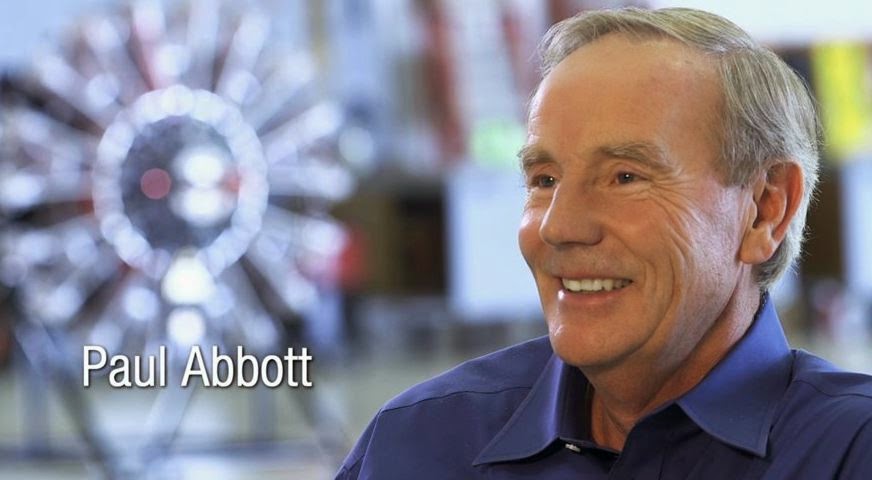
Paul Abbott is the CEO of Covington Aircraft Engines.

How important is integrity?  

When you build airplane engines, lives depend upon it!

Paul Abbott has been putting integrity and dependability into aircraft engines since 1972. But there's more to the story than nuts and bolts.


Bookmark and Share

Friday, April 17, 2015

For-Profit Mission?

 
Building a better future for Honduras, one toy block at a time.


For-profit mission? Sounds like an oxymoron to most people! But the Moravian vision of Count Zinzendorf is alive and well in the Tegu toy company of Honduras. 

Chris and Will Haughey have mixed a passion for the common good with entrepreneurial know-how to eliminate the need for external donations. 

Watch faith at work here: https://www.youtube.com/watch?v=OGNK3h0C1G4


Bookmark and Share

Friday, April 10, 2015

"Business As It Ought To Be"


Katie Nienow creates "business as it ought to be," while restoring people to "rightness." 

When she left youth ministry to work with microfinance, Katie Nienow's church employer was not supportive. Yet she found that helping people manage their income and expense was truly work that "engaged her soul." Today she lives in Silicon Valley, where she restores people to "rightness," while creating "business as it ought to be."

Here's Katie's story: http://www.christianitytoday.com/thisisourcity/silicon-valley/business-as-god-meant-it-to-be.html


Bookmark and Share

Friday, April 3, 2015

"We Make Beautiful Places"

Bob Walker, President of Walker Manufacturing Company

A friend recently sent me 2 dozen links to video clips showing followers of Christ "contextualizing" their faith in the workplace. Over the next few weeks, I'll be sharing some of my favorites.

Today's clip is of Bob Walker, President of Walker Manufacturing Company, a business that makes lawnmowers. But, as they say it, "instead of making lawnmowers, we make beautiful places." 

Enjoy Bob Walker's story here: https://vimeo.com/75361820                       


Bookmark and Share

Friday, March 27, 2015

Our Greatest Hope


God gives the power to make wealth (Deut. 8), and the perilous ability to lose it.

In order for God-given standards of morality and ethics to become a reality in our civil and economic systems, there must be a real love for the Divine Person who gave us those standards in the first place. Legislators cannot produce the kind of deep-seated shift that is necessary to put our civil and economic house in order. We cannot fix our fundamental problems by passing laws. Laws don't change hearts.

This does not mean we should not enact good laws and change bad ones. We must. But something more fundamental is necessary. At the core, it isn't about doing the right thing. It's about loving the right Person. Because when we love the right Person, we'll do the right thing.

The desire to embrace God's ways does not come naturally to the human heart. It comes from a supernatural work of God's grace in our lives. This work of God takes place through an essential relationship with the One who made us, like the vine and a branch sharing the same sap. Without this essential connection, Christianity can easily turn into dead religion.

Jesus said, "You shall love the Lord your God with all your heart, and with all your soul, and with all your mind...and you shall love your neighbor as yourself. On these two commandments hang all the Law and the prophets."

If we truly love the Lord, we will love the things He loves. If we love Christ, we will keep His commandments because we want to. If we truly love people, we will gladly behave rightly toward them because we want to, not because the law compels us.

Where does this "want to" come from?  It comes from God Himself, who "works in us both to will and to do" His good pleasure (Philippians 2:13). He is our greatest hope.


Bookmark and Share

Friday, March 20, 2015

What Exactly Is The Work Of God?


Behold the work of God?

Ordinarily when we think of the Jesus doing the work His Father showed Him to do (John 5:19), we think of Christ raising someone from the dead, feeding 5,000, or healing blind beggars by the side of the road.

But have you ever stopped to consider Jesus spent the majority of His days doing carpentry work, or the work of a stonemason? (Some scholars think Jesus may have done both. Perhaps He was a general contractor.)

The question is: When Jesus did carpentry, was He doing the work of God?

Since Christ was God, He couldn't help but do the work of God, no matter what He did. But by Jesus' own testimony, He only did what His Father showed Him to do. When exactly did this arrangement start? Did it begin after He went into the desert and fasted for 40 days? Was it also the case during the 17-20 years of carpentry work He did in Nazareth?

We don’t know much about the life of Christ during His carpentry years. But we do know this: Jesus “grew in wisdom and stature, and in favor with God and men" (Luke 2:52), and He spent about six fold more time doing carpentry work than preacher-teacher work.

It is significant to note that when Jesus was 30 years old, at His baptism, the Father audibly proclaimed: “This is My beloved Son, in whom I am well pleased (Matthew 3:16-17).” That was before Jesus healed a single person, fed 5,000, or preached to multitudes. 

The Father does not elaborate on what exactly was so pleasing to Him. Certainly Christ’s character pleased Him. But I suspect the Father was also pleased with how Jesus spent His time and energy up to that point in His earthly life, doing what His Father showed Him to do: a whole lot of carpentry.

Justin Martyr, the 2nd century historian, claimed that plows made by Jesus were still in existence around the year 120 A.D. when Martyr lived. If so, Jesus must have done superior work! But whether it was building houses or making plows, certainly Jesus understood He was doing His Father's work. This casts “the work of God” in a much different light than we ordinarily think of "the work of God."  

What exactly is the work of God? Whatever the Father shows us to do. 


Bookmark and Share

Friday, March 13, 2015

Student Video Contest

Attention high school and college students: The Institute for Faith, Work & Economics [IFWE] is inviting you to create a compelling and creative one-to-three minute video illustrating your response to questions like these: How can every choice I make glorify God? What is the connection between following God’s calling for my life and finding fulfillment? How can I effectively help the poor, even as a student? They are awarding $5,000 in prizes. See details below.

As mentioned last week, our organization, Worldview Matters, is engaged in a major project to get Theology of Work and Human Flourishing [TOWHF] embedded into the regular academic curriculum of P-12 Christian schools. Today I want to acknowledge the Institute for Faith, Work and Economics and Bakke Graduate University for their generous funding of this major initiative.

My association with Bakke Graduate University goes back to my years as a D. Min. student, where I focused on Theology of Work. Lowell Bakke and his excellent team of instructors, including Paul Stevens, Larry Peabody and Gwen Dewey, have done an outstanding job of training thousands of followers of Christ in understanding Theology of Work and its practical implications, mostly outside of the United States. If you are considering a Masters Degree, or a D. Min. Degree, do yourself a favor and check out BGU here.

We are very thankful for the funding BGU is providing for non-US schools to participate in the P-12 WRAP [see Worklife Restoration and Advancement Project]. These schools are located in Peru, Guatemala and Nigeria.  

The Institute for Faith, Work and Economics [IFWE] is headquartered in Washington, D.C., with Hugh Whelchel at the helm. Hugh is the author of the excellent book, How Then Shall We Work: Rediscovering the Biblical Doctrine of Work. IFWE is a Christian research organization is committed to promoting biblical and economic principles that help individuals to find fulfillment in their work and to contribute to a free and flourishing society. Vsit the IFWE site here. They are a gold mine of resources!

We are very thankful for the funding IFWE is providing for US schools in the P-12 WRAP, located in Iowa, Kansas and Virginia.

If you know high school or college students, please pass the word on about the IFWE Student Video Contest. They are awarding $5,000 in prizes. The deadline for submissions is April 30, 2015. For details, click here.

If you have never viewed the outstanding video IFWE produced, "Freedom to Flourish," you're missing something inspirational! Take a look:


* * *


Friday, March 6, 2015

The Awesome Activator


Our granddaughter, Emily, at the kitchen sink. I know she looks like an angel, but is she doing "the work of God?" Really?

I believe building a solid Theology of Work and Human Flourishing [TOWHF] into the hearts and minds of the coming generation is the next big frontier in the "faith-at-work" movement.

This is why Worldview Matters is helping Christian schools to intentionally and systematically embed TOWHF into their existing P-12 curriculum. We call it the "P-12 WRAP: Worklife Restoration and Advancement Project." [For more on this project, click here.]

But our task is not complete without active participation of parents in the home.

To help in this regard, we have developed a resource for parents (and teachers) that helps them guide young minds through a cognitive process of intentionally putting their daily work into the larger context of a biblical world-and-life-view. You might call this contextualization for kids.

We call it, The Awesome Activator. But don't be fooled. This tool works just as well with adults! Below is the layout. To get the most out of this, enlarge the images below by clicking them: 


To help young people think of specific biblical worldview truths to draw from, click here for a list of 101 biblical premises developed by The Biblical Worldview Institute, Puyallup, Washington. Go through this list and consider which of these truth statements particularly relate to washing dishes. [I once did this with a large group of parents and students, when, after considering which truths related to washing dishes, a particular student raised her hand and said: "Hell is real!"]


For a single .pdf copy of the complete dish washing example, click here.

For another example, based on the work of George Washington Carver, click here.

There is no end to the application of this tool!

How does building a bird house fit into God's purpose for humans--and birds? What meaning can such a project have beyond the shear enjoyment of building it (although this, too, is valid and biblical). Use the Awesome Activator tool to find out more reasons to build a bird house!
  
Is caring for a pet the work of God? How so, specifically? Use the Awesome Activator to discuss this question with your son or daughter. 

I once filled out an Awesome Activator for myself in connection with mowing my lawn. This led to putting the following reminder on the handle of my lawn mower:

Each time I mow my lawn, I am reminded of the First Commission of Gen. 1:26-28. It helps bring extraordinary meaning to my "ordinary" work.

To download a copy of The Awesome Activator for use with your children, your grandchildren, or yourself, click here. [downloaded Word file]

If you are a Christian school principal, and you would like to have an exploratory chat with me about how you can build Theology of Work and Human Flourishing into your existing P-12 curriculum, you may request a phone (or SKYPE) conversation to discuss the "P-12 WRAP: Worklife Restoration and Advancement Project" here.

If you are a parent (or a teacher), and you would like to have a personal one-on-one "coaching" session with me on how to help your child (or students) make intentional connections between the biblical worldview and their everyday work, use this link to arrange a 1-hour personal coaching session: here.

* * *


Friday, February 27, 2015

The DADI Plan Part 2

When it comes to making intentional faith-at-work connections, it happens best when the connections are specific, measurable and relevant. 

Last week I introduced a "thought template" called The DADI Plan. Today, I'll complete the process by explaining the final step in the Plan: Implementation. 

When it comes to being intentional about living out the implications of our faith in the workplace, our aspirations will remain in the realm of "good intentions" until there is a S.M.A.R.T. plan of action:

S = Specific
M = Measurable
A = Attainable
R = Relevant
T = Time-Oriented

Although the S.M.A.R.T. acronym is often attributed to Peter Drucker, is believed to have first been coined by George T. Doran, in the November, 1981, issue of Management Review. For a concise explanation of S.M.A.R.T., see the Wayne State University summary here.       
 
The point is, a good plan of implementation has specific and measurable objectives that are not only attainable (no "pie-in-the-sky"), but relevant to our situation, and accomplished within a certain time-frame (not "by-and-by").

In the case of Don Flow, whom I am using here as an example, if he were employing The DADI Plan to think through the implications of his faith for customer service, the final step in his DADI Plan process might look something like this:

I will put kiosks into the showroom floor that will enable employees to show customers all the information they need to make a good decision regarding the purchase of a car.

I will require employees to give customers a realistic estimate of the time it will take to fix their cars, with the commitment that if it takes longer, we will deliver the car at our own inconvenience--not the customer's.

I will require my employees to make only one call to explain the repairs needed, and the price. If the problem is misdiagnosed and the problem costs more, we will eat the difference.

If we do not fix the car right the first time, we will not charge for the second. If it takes a second time, we will pick up the car and return it fully detailed, with a full tank of gas.

I will implement these policies over the next 9 months.

For a copy of the complete DADI Plan as I speculate Don Flow might have filled one out, based on what I know about his beliefs and practices, click here. 

Click on the names below for more samples:

William Wilberforce

George Washington Carver


For a blank electronic template to use for yourself, click here  [Downloaded Word file.]


* * *


Friday, February 20, 2015

The DADI Plan


When it comes to being intentional about aligning daily work with the "bigger picture" of a biblical worldview [contextualizing it], The DADI Plan is a helpful tool (pronounced daddy).

This contextualizing aid has five parts:

Part 1: Write down a specific workplace activity you want to align with the biblical world-and-life view. For example, if you were Don Flow, CEO of Flow Automotive, you might write: "I want to live out the full implications of my faith in the context of customer service within my company." 

If you have not done so, please view Flow's SPU speech here.

Part 2: Identify biblical truths you have discovered from Scripture that relate directly to what you identified in Part 1. Write these as "I believe" statements. For example, if you were Don Flow, you might write: "I believe God actively moves in our daily lives to give us opportunities to care for people in the name of Christ. I believe every individual is created, loved and sustained by God, and thus they are worthy of utmost respect and deserve extraordinary service regardless of their behavior or station in life."

For help with biblical truths, click here.

Part 3: List several ways you could apply the beliefs identified in Step 2 to the objective stated in Step 1. Write these as "I could" statements. This is your vision of "what could be." For example, Don Flow might write: "I could put relationships ahead of transactions. I could treat each customer like a valued friend or a guest in my home. I could be transparent and open with each customer throughout the entire process of purchasing a car, or getting one repaired."

Part 4: Identify specific training, research or preparation you must develop in order to be successful. Write these as "I must" statements. Don Flow might write: "I must train all of my employees (many of whom are not believers) to treat each customer as a 'valued friend' or 'guest in the home.' I must put company policies into place that will reinforce the implications of the biblical worldview."

Part 5 is implementation. This will take more space than I have left in today's post. Tune in next week.

In the meantime, try your hand at Part 1-4, when you can get away to a quiet, undisturbed place.


Enlarge this image by clicking on it once. Come back to this page by clicking the small "X" you will see.


* * *


Friday, February 13, 2015

Intentionality Is Key

Intentionality is the key to putting "theology of work" to work. 

In the past two posts, we have seen examples of followers of Christ making intentional alignments between biblical truth and their daily work: Jack van Hartesvelt, who buys and sells hotels, and Don Flow, who sells and services automobiles. 

The key to successful contextualization of faith and work is intentionality. Of course, prayer is essential, and apart from God's enabling grace we are helpless. But sitting down outside of the workplace and thinking through how we can align our work with the biblical worldview is something people like Jack van Hartesvelt and Don Flow have done. At the risk of being redundant: intentionality is key. 

Over the past month, I have shared specific questions to ask when it comes to contextualizing our work. Those questions, along with some I did not include in my posts, are available to you in a single document here: "Questions for Contextualizing Work."

Here's another document you will find useful: "Signs That I Have A Well-Developed Theology Of Work."

Carrying these documents in your wallet or on your smart phone is good. Reading blog posts and saying to yourself, "that's a good idea!" is also good. But not good enough. What it takes, is slowing down long enough to think intentionally about how you can contextualize your faith in your specific workplace. 

I have discovered over the years that giving people practical tools for this process helps. With this in mind, I have developed a number of simple tools for this purpose, and I'll share one of them with you next week.


* * *