test
A Publication of RenewaNation: Helping Children Develop a Biblical Worldview.

To Link To The RenewaNation Website


Friday, April 24, 2015

Lives Depend Upon It!


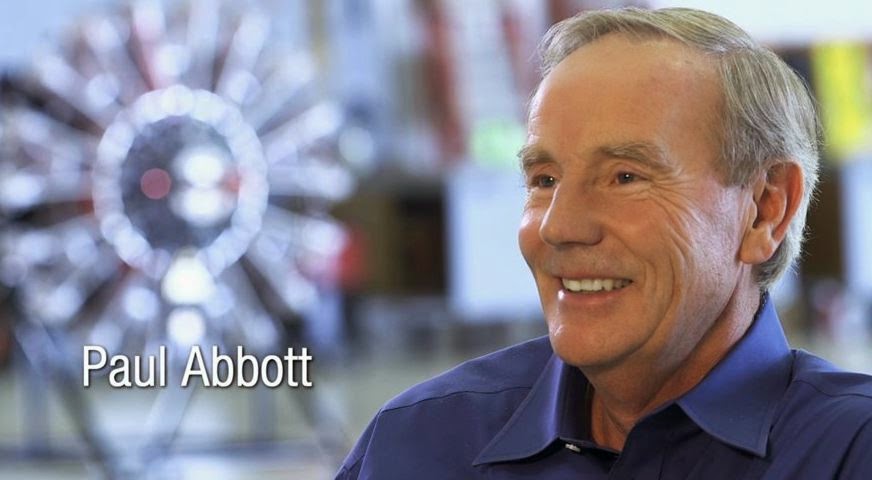
Paul Abbott is the CEO of Covington Aircraft Engines.

How important is integrity?  

When you build airplane engines, lives depend upon it!

Paul Abbott has been putting integrity and dependability into aircraft engines since 1972. But there's more to the story than nuts and bolts.


Bookmark and Share

Friday, April 17, 2015

For-Profit Mission?

 
Building a better future for Honduras, one toy block at a time.


For-profit mission? Sounds like an oxymoron to most people! But the Moravian vision of Count Zinzendorf is alive and well in the Tegu toy company of Honduras. 

Chris and Will Haughey have mixed a passion for the common good with entrepreneurial know-how to eliminate the need for external donations. 

Watch faith at work here: https://www.youtube.com/watch?v=OGNK3h0C1G4


Bookmark and Share

Friday, April 10, 2015

"Business As It Ought To Be"


Katie Nienow creates "business as it ought to be," while restoring people to "rightness." 

When she left youth ministry to work with microfinance, Katie Nienow's church employer was not supportive. Yet she found that helping people manage their income and expense was truly work that "engaged her soul." Today she lives in Silicon Valley, where she restores people to "rightness," while creating "business as it ought to be."

Here's Katie's story: http://www.christianitytoday.com/thisisourcity/silicon-valley/business-as-god-meant-it-to-be.html


Bookmark and Share

Friday, April 3, 2015

"We Make Beautiful Places"

Bob Walker, President of Walker Manufacturing Company

A friend recently sent me 2 dozen links to video clips showing followers of Christ "contextualizing" their faith in the workplace. Over the next few weeks, I'll be sharing some of my favorites.

Today's clip is of Bob Walker, President of Walker Manufacturing Company, a business that makes lawnmowers. But, as they say it, "instead of making lawnmowers, we make beautiful places." 

Enjoy Bob Walker's story here: https://vimeo.com/75361820                       


Bookmark and Share

Friday, March 27, 2015

Our Greatest Hope


God gives the power to make wealth (Deut. 8), and the perilous ability to lose it.

In order for God-given standards of morality and ethics to become a reality in our civil and economic systems, there must be a real love for the Divine Person who gave us those standards in the first place. Legislators cannot produce the kind of deep-seated shift that is necessary to put our civil and economic house in order. We cannot fix our fundamental problems by passing laws. Laws don't change hearts.

This does not mean we should not enact good laws and change bad ones. We must. But something more fundamental is necessary. At the core, it isn't about doing the right thing. It's about loving the right Person. Because when we love the right Person, we'll do the right thing.

The desire to embrace God's ways does not come naturally to the human heart. It comes from a supernatural work of God's grace in our lives. This work of God takes place through an essential relationship with the One who made us, like the vine and a branch sharing the same sap. Without this essential connection, Christianity can easily turn into dead religion.

Jesus said, "You shall love the Lord your God with all your heart, and with all your soul, and with all your mind...and you shall love your neighbor as yourself. On these two commandments hang all the Law and the prophets."

If we truly love the Lord, we will love the things He loves. If we love Christ, we will keep His commandments because we want to. If we truly love people, we will gladly behave rightly toward them because we want to, not because the law compels us.

Where does this "want to" come from?  It comes from God Himself, who "works in us both to will and to do" His good pleasure (Philippians 2:13). He is our greatest hope.


Bookmark and Share

Friday, March 20, 2015

What Exactly Is The Work Of God?


Behold the work of God?

Ordinarily when we think of the Jesus doing the work His Father showed Him to do (John 5:19), we think of Christ raising someone from the dead, feeding 5,000, or healing blind beggars by the side of the road.

But have you ever stopped to consider Jesus spent the majority of His days doing carpentry work, or the work of a stonemason? (Some scholars think Jesus may have done both. Perhaps He was a general contractor.)

The question is: When Jesus did carpentry, was He doing the work of God?

Since Christ was God, He couldn't help but do the work of God, no matter what He did. But by Jesus' own testimony, He only did what His Father showed Him to do. When exactly did this arrangement start? Did it begin after He went into the desert and fasted for 40 days? Was it also the case during the 17-20 years of carpentry work He did in Nazareth?

We don’t know much about the life of Christ during His carpentry years. But we do know this: Jesus “grew in wisdom and stature, and in favor with God and men" (Luke 2:52), and He spent about six fold more time doing carpentry work than preacher-teacher work.

It is significant to note that when Jesus was 30 years old, at His baptism, the Father audibly proclaimed: “This is My beloved Son, in whom I am well pleased (Matthew 3:16-17).” That was before Jesus healed a single person, fed 5,000, or preached to multitudes. 

The Father does not elaborate on what exactly was so pleasing to Him. Certainly Christ’s character pleased Him. But I suspect the Father was also pleased with how Jesus spent His time and energy up to that point in His earthly life, doing what His Father showed Him to do: a whole lot of carpentry.

Justin Martyr, the 2nd century historian, claimed that plows made by Jesus were still in existence around the year 120 A.D. when Martyr lived. If so, Jesus must have done superior work! But whether it was building houses or making plows, certainly Jesus understood He was doing His Father's work. This casts “the work of God” in a much different light than we ordinarily think of "the work of God."  

What exactly is the work of God? Whatever the Father shows us to do. 


Bookmark and Share

Friday, March 13, 2015

Student Video Contest

Attention high school and college students: The Institute for Faith, Work & Economics [IFWE] is inviting you to create a compelling and creative one-to-three minute video illustrating your response to questions like these: How can every choice I make glorify God? What is the connection between following God’s calling for my life and finding fulfillment? How can I effectively help the poor, even as a student? They are awarding $5,000 in prizes. See details below.

As mentioned last week, our organization, Worldview Matters, is engaged in a major project to get Theology of Work and Human Flourishing [TOWHF] embedded into the regular academic curriculum of P-12 Christian schools. Today I want to acknowledge the Institute for Faith, Work and Economics and Bakke Graduate University for their generous funding of this major initiative.

My association with Bakke Graduate University goes back to my years as a D. Min. student, where I focused on Theology of Work. Lowell Bakke and his excellent team of instructors, including Paul Stevens, Larry Peabody and Gwen Dewey, have done an outstanding job of training thousands of followers of Christ in understanding Theology of Work and its practical implications, mostly outside of the United States. If you are considering a Masters Degree, or a D. Min. Degree, do yourself a favor and check out BGU here.

We are very thankful for the funding BGU is providing for non-US schools to participate in the P-12 WRAP [see Worklife Restoration and Advancement Project]. These schools are located in Peru, Guatemala and Nigeria.  

The Institute for Faith, Work and Economics [IFWE] is headquartered in Washington, D.C., with Hugh Whelchel at the helm. Hugh is the author of the excellent book, How Then Shall We Work: Rediscovering the Biblical Doctrine of Work. IFWE is a Christian research organization is committed to promoting biblical and economic principles that help individuals to find fulfillment in their work and to contribute to a free and flourishing society. Vsit the IFWE site here. They are a gold mine of resources!

We are very thankful for the funding IFWE is providing for US schools in the P-12 WRAP, located in Iowa, Kansas and Virginia.

If you know high school or college students, please pass the word on about the IFWE Student Video Contest. They are awarding $5,000 in prizes. The deadline for submissions is April 30, 2015. For details, click here.

If you have never viewed the outstanding video IFWE produced, "Freedom to Flourish," you're missing something inspirational! Take a look:


* * *


Friday, March 6, 2015

The Awesome Activator


Our granddaughter, Emily, at the kitchen sink. I know she looks like an angel, but is she doing "the work of God?" Really?

I believe building a solid Theology of Work and Human Flourishing [TOWHF] into the hearts and minds of the coming generation is the next big frontier in the "faith-at-work" movement.

This is why Worldview Matters is helping Christian schools to intentionally and systematically embed TOWHF into their existing P-12 curriculum. We call it the "P-12 WRAP: Worklife Restoration and Advancement Project." [For more on this project, click here.]

But our task is not complete without active participation of parents in the home.

To help in this regard, we have developed a resource for parents (and teachers) that helps them guide young minds through a cognitive process of intentionally putting their daily work into the larger context of a biblical world-and-life-view. You might call this contextualization for kids.

We call it, The Awesome Activator. But don't be fooled. This tool works just as well with adults! Below is the layout. To get the most out of this, enlarge the images below by clicking them: 


To help young people think of specific biblical worldview truths to draw from, click here for a list of 101 biblical premises developed by The Biblical Worldview Institute, Puyallup, Washington. Go through this list and consider which of these truth statements particularly relate to washing dishes. [I once did this with a large group of parents and students, when, after considering which truths related to washing dishes, a particular student raised her hand and said: "Hell is real!"]


For a single .pdf copy of the complete dish washing example, click here.

For another example, based on the work of George Washington Carver, click here.

There is no end to the application of this tool!

How does building a bird house fit into God's purpose for humans--and birds? What meaning can such a project have beyond the shear enjoyment of building it (although this, too, is valid and biblical). Use the Awesome Activator tool to find out more reasons to build a bird house!
  
Is caring for a pet the work of God? How so, specifically? Use the Awesome Activator to discuss this question with your son or daughter. 

I once filled out an Awesome Activator for myself in connection with mowing my lawn. This led to putting the following reminder on the handle of my lawn mower:

Each time I mow my lawn, I am reminded of the First Commission of Gen. 1:26-28. It helps bring extraordinary meaning to my "ordinary" work.

To download a copy of The Awesome Activator for use with your children, your grandchildren, or yourself, click here. [downloaded Word file]

If you are a Christian school principal, and you would like to have an exploratory chat with me about how you can build Theology of Work and Human Flourishing into your existing P-12 curriculum, you may request a phone (or SKYPE) conversation to discuss the "P-12 WRAP: Worklife Restoration and Advancement Project" here.

If you are a parent (or a teacher), and you would like to have a personal one-on-one "coaching" session with me on how to help your child (or students) make intentional connections between the biblical worldview and their everyday work, use this link to arrange a 1-hour personal coaching session: here.

* * *


Friday, February 27, 2015

The DADI Plan Part 2

When it comes to making intentional faith-at-work connections, it happens best when the connections are specific, measurable and relevant. 

Last week I introduced a "thought template" called The DADI Plan. Today, I'll complete the process by explaining the final step in the Plan: Implementation. 

When it comes to being intentional about living out the implications of our faith in the workplace, our aspirations will remain in the realm of "good intentions" until there is a S.M.A.R.T. plan of action:

S = Specific
M = Measurable
A = Attainable
R = Relevant
T = Time-Oriented

Although the S.M.A.R.T. acronym is often attributed to Peter Drucker, is believed to have first been coined by George T. Doran, in the November, 1981, issue of Management Review. For a concise explanation of S.M.A.R.T., see the Wayne State University summary here.       
 
The point is, a good plan of implementation has specific and measurable objectives that are not only attainable (no "pie-in-the-sky"), but relevant to our situation, and accomplished within a certain time-frame (not "by-and-by").

In the case of Don Flow, whom I am using here as an example, if he were employing The DADI Plan to think through the implications of his faith for customer service, the final step in his DADI Plan process might look something like this:

I will put kiosks into the showroom floor that will enable employees to show customers all the information they need to make a good decision regarding the purchase of a car.

I will require employees to give customers a realistic estimate of the time it will take to fix their cars, with the commitment that if it takes longer, we will deliver the car at our own inconvenience--not the customer's.

I will require my employees to make only one call to explain the repairs needed, and the price. If the problem is misdiagnosed and the problem costs more, we will eat the difference.

If we do not fix the car right the first time, we will not charge for the second. If it takes a second time, we will pick up the car and return it fully detailed, with a full tank of gas.

I will implement these policies over the next 9 months.

For a copy of the complete DADI Plan as I speculate Don Flow might have filled one out, based on what I know about his beliefs and practices, click here. 

Click on the names below for more samples:

William Wilberforce

George Washington Carver


For a blank electronic template to use for yourself, click here  [Downloaded Word file.]


* * *


Friday, February 20, 2015

The DADI Plan


When it comes to being intentional about aligning daily work with the "bigger picture" of a biblical worldview [contextualizing it], The DADI Plan is a helpful tool (pronounced daddy).

This contextualizing aid has five parts:

Part 1: Write down a specific workplace activity you want to align with the biblical world-and-life view. For example, if you were Don Flow, CEO of Flow Automotive, you might write: "I want to live out the full implications of my faith in the context of customer service within my company." 

If you have not done so, please view Flow's SPU speech here.

Part 2: Identify biblical truths you have discovered from Scripture that relate directly to what you identified in Part 1. Write these as "I believe" statements. For example, if you were Don Flow, you might write: "I believe God actively moves in our daily lives to give us opportunities to care for people in the name of Christ. I believe every individual is created, loved and sustained by God, and thus they are worthy of utmost respect and deserve extraordinary service regardless of their behavior or station in life."

For help with biblical truths, click here.

Part 3: List several ways you could apply the beliefs identified in Step 2 to the objective stated in Step 1. Write these as "I could" statements. This is your vision of "what could be." For example, Don Flow might write: "I could put relationships ahead of transactions. I could treat each customer like a valued friend or a guest in my home. I could be transparent and open with each customer throughout the entire process of purchasing a car, or getting one repaired."

Part 4: Identify specific training, research or preparation you must develop in order to be successful. Write these as "I must" statements. Don Flow might write: "I must train all of my employees (many of whom are not believers) to treat each customer as a 'valued friend' or 'guest in the home.' I must put company policies into place that will reinforce the implications of the biblical worldview."

Part 5 is implementation. This will take more space than I have left in today's post. Tune in next week.

In the meantime, try your hand at Part 1-4, when you can get away to a quiet, undisturbed place.


Enlarge this image by clicking on it once. Come back to this page by clicking the small "X" you will see.


* * *


Friday, February 13, 2015

Intentionality Is Key

Intentionality is the key to putting "theology of work" to work. 

In the past two posts, we have seen examples of followers of Christ making intentional alignments between biblical truth and their daily work: Jack van Hartesvelt, who buys and sells hotels, and Don Flow, who sells and services automobiles. 

The key to successful contextualization of faith and work is intentionality. Of course, prayer is essential, and apart from God's enabling grace we are helpless. But sitting down outside of the workplace and thinking through how we can align our work with the biblical worldview is something people like Jack van Hartesvelt and Don Flow have done. At the risk of being redundant: intentionality is key. 

Over the past month, I have shared specific questions to ask when it comes to contextualizing our work. Those questions, along with some I did not include in my posts, are available to you in a single document here: "Questions for Contextualizing Work."

Here's another document you will find useful: "Signs That I Have A Well-Developed Theology Of Work."

Carrying these documents in your wallet or on your smart phone is good. Reading blog posts and saying to yourself, "that's a good idea!" is also good. But not good enough. What it takes, is slowing down long enough to think intentionally about how you can contextualize your faith in your specific workplace. 

I have discovered over the years that giving people practical tools for this process helps. With this in mind, I have developed a number of simple tools for this purpose, and I'll share one of them with you next week.


* * *


Friday, February 6, 2015

How To Align Cars With A Biblical Worldview


Examples of Christ-followers who contextualize their faith in real workplaces are extremely helpful. Last week, we looked at Jack van Hartesvelt, who made a conscious choice to apply what he was hearing on Sunday to the work he was doing on Monday as a hotel investment negotiator.

This week, I want to share another inspiring example: Don Flow, CEO of Flow Automotive. Flow runs a car sales and service company with 32 dealerships in the North Carolina area of the USA.

Most people don't put "Christianity" and "car sales" in the same sentence. For Don Flow, they cannot be separated. Living out the implications of his faith in the real world of automotive sales and service is where his drive comes from. Thinking through how his company could align policy and practice with the biblical worldview has made a dramatic difference in the way Flow Automotive sells and services cars.

In an interview by Al Erisman in Ethix magazine, Flow said: 

"We don’t have the traditional run back and forth negotiating process; we have a pricing structure that’s set. You don’t have to be a tough negotiator, or more educated, to get a fair price. If you’ve got a Ph. D. or if you’re a janitor, you’ll pay the same price for the vehicle. We did a study and found that the people who typically paid the least for the cars were the most able to pay. Those least able to pay, paid the most. For me, it was wrong to take advantage of the least able."

"We want to be transparent to our customers. We share all of our information with them. In our appraisal process of a car, we go online together with the customer, pull up all the auction reports, Kelley Blue Book, NADA Black Book. We have kiosks in our showroom floors so people can go online. So we try to accommodate the customer at every step, in the way they’d like to buy a car. In our operating principle, the customer is in control of the process, and our job is to help the customer in that process."

Several years ago I heard Don Flow give a speech at Seattle Pacific University. I asked permission to edit his remarks, and I invite you to watch this 4-minute clip, to get a picture of how to align cars with a biblical worldview:


If this video does not play, click here. 


* * *


Friday, January 30, 2015

The Most Inspiring Thing You'll Hear All Month


In his book The Call, Os Guinness makes an astute observation: "The problem with Western Christians is not that they aren't where they should be but that they aren't what they should be where they are."

Imagine a world in which followers of Christ (who are sprinkled like salt throughout the entire spectrum of society in the workplace--right now) got up on Monday morning and said: "Today, by God's grace, I'm going to live out the full implications of my faith at work!"

What might happen if the Body of Christ (even 10%) were to actually take what we heard on Sunday morning and apply in on Monday morning in the workplace? 


If you want to see what might happen, watch the video below. It is the personal account of Jack van Hartesvelt, who decided to bring what he heard on Sunday to work with him on Monday. It may be the most inspiring thing you'll hear all month. 

To put work into the larger context of the biblical view of Moral Order and Purpose, here are some questions we can ask:

How has the reality of sin in a fallen world affected this activity? What can I do about it?

Is justice being done in and through this activity?

How can God's will be done on the earth today, as it is in heaven, through this activity? 

How does this activity fulfill The First Commission given by God to human beings: to govern over all the earth (Gen. 1:26-28)?

How does this activity provide opportunities for me to "observe all that Christ commanded," as given in the Great Commission of Matthew 28:18-20?

How does this activity relate to eternity? What eternal purpose does this activity have? How might this activity relate to what will be going on in the New Earth (Rev. 21)?

How does this activity serve to reconcile all things to Christ (Col. 1)?

What does the Kingdom of God "look like" when it "comes" to this activity? This workplace?

How does this activity provide opportunities for me (by God's grace) to be "salt" and "light" in the world?

Why is this activity truly worthwhile? Why does it really matter?

Think about these questions as you watch Jack's story. He buys and sells hotels for an investment firm. The week before I interviewed him, his company sold a hotel in Manhattan for one million dollars--per room:


If this video does not play, click here.


* * *


Friday, January 23, 2015

"The Basic Problem Of The Christians..."


Francis Schaeffer wrote in A Christian Manifesto: "The basic problem of the Christians...is that they have seen things in bits and pieces instead of totals." 

Contextualization is a way of seeing that brings greater understanding and meaning to things than the things have in themselves. For followers of Christ, ultimate contextualization is about viewing all things in the context of the greatest larger "total:" the biblical world-and-life view.

Students contextualize academic disciplines when they view them in the context of something much larger than the academic disciplines themselves. When plants are viewed in the context of a biblical world-and-life view, they take on greater meaning, significance and purpose than plants have by themselves. George Washington Carver got this. 

Airline pilots and NFL quarterbacks can contextualize their work when they view it in the context of something bigger than piloting and playing football. [Go Hawks!]

When it comes to viewing our work in the context of a biblical understanding of Creation and Humanity, we can ask questions like:

How does my work fit into God's reason for creating the material world, and all that it contains? [What is God's intention for airplanes? For football?]

Are there unseen spiritual realities working against me? [How can I appropriate the grace of God through a painful string of interceptions, and still "keep the faith?"] 

How does God's ownership of all things relate to the material blessings I enjoy? What responsibilities come with these blessings? 

How can I encourage a full release and function of God’s gifts in others through my position as a pilot, or a quarterback, or a mother or a CEO?

Am I "carrying Christ well" at work? [I may be the only "Bible" my co-workers, passengers or fans will ever read.] 

What physical, emotional or spiritual needs of others can be met through my work? How can I be an "agent of grace" when things are going wrong?

How does my work fit into my primary call to be conformed to the image of Christ? How does my work help bring this about--or hinder it? 

Rather than answer all of the questions above, try focusing on just one that interests you, and "peel the onion." Or, create your own question! As I mentioned last week, the best questions are those we ask ourselves. 

Next week we'll look at contextualization questions relating our work to the bigger picture of Moral Order and Purpose.

* * *


Friday, January 16, 2015

Nothing Is Better Than A Well-Framed Question


Contextualization is a way of bringing more meaning to "pieces" of life than the pieces have by themselves. [Click here.]

When Christian teachers contextualize, they help students see how any topic or activity relates to the larger context of a biblical world-and-life view. This larger context provides a unified view of everything, and justifies the very concept of a "universe." [That's what people used to study at the university, before the secularization of higher education. At one time, theology was the "Queen of the Sciences." Imagine that!]

Workers [including students], contextualize their work when they put it into the larger context of a biblical worldview. Through this, we are able to bring more meaning to the "pieces" of our jobs than they can possibly have in themselves. Remember: we don't find meaning in our work, be bring meaning to our work.  

When it comes to contextualizing, nothing is better than a well-framed question. Posing good questions is more powerful than making statements. Jesus often taught by asking questions. Great questions are ones that cause people to reflect deeply, and to personalize their answers.  The best questions are those we ask ourselves!

With this in mind, I'll share some thoughts about questions for contextualization.  

First, understand that 99.8% of all questions that relate anything to the "bigger picture" of a biblical worldview fall within five categories: 1. Questions relating things to God. 2. Questions relating things to Creation. 3. Questions relating things to Humanity. 4. Questions relating things to Moral Order. 5. Questions relating things to Purpose. All contextualization questions flow from this deep pool.

When it comes to seeing our work in the context of God, we might ask:

What does God think about this activity?

What joy (or pain) does God receive through this activity?

How does God speak to people through this activity? What might He want to say to others through what I do, and how I do it?

Where was God when _________ happened [something went wrong]? How did God reveal Himself when this thing occurred? Was He saying something?

How does the centrality of Christ relate to this activity? How is He honored by it? (Dishonored?)

What qualifies this activity to be called "the work of God?"

Try some of these questions. Better yet, shape some questions for yourself!

Next week: questions for contextualizing Creation and Humanity.

Students are workers--without pay. They can bring extraordinary meaning to their math work when they view it in the context of something much larger than math itself. Wise students don't find meaning in their schoolwork, they bring meaning to it. (Effective teachers facilitate this.) Boeing engineers can do the same, bringing meaning to their work by putting it into the context of God's "bigger picture." So can bankers, bus drivers and bakers. This kind of contextualization was integral to education at early Harvard and Yale (prior to the secularization of American schools), and provided a pattern for generations to come. But it has since disappeared, even among Christian schools, at all levels. See the research by Dr. David Scott here.  

Take the on-line course "Increase Meaning: A Wholistic Approach To Christian Education."  


Bookmark and Share

Friday, January 9, 2015

The Power And Import Of Contextualization


What do you see in the photo above?

I have shown this image to many groups around the world, and I have asked the same question: What is it? What is the truth about this? What are you looking at?

The most common answers I receive are: "the rings of Saturn," "a tire," or "a coffee cup."

The object in the photo is something familiar. In fact, some of you may see it every day. But in all the years of doing this exercise, I have never had anyone correctly identify the image.  

Why? Because there is not enough of the whole to make proper sense of the part. I have whited out most of the photo. There is not enough of the complete picture to decipher the portion. To put it another way, there is not enough of the context to bring true meaning to the piece.

This illustrates the power and import of contextualization. That is, putting "pieces" into the context of a "larger whole" that will bring more meaning to the pieces then the pieces can have by themselves. Great teachers don't find meaning in the topics they teach. They bring meaning to them.

In the case of school teachers, a "piece" can be a piece of history, a piece of science, a piece of literature, a piece of athletics, or a piece of music. Christian teachers are in the unique position to help students put these "pieces" into the context of a much larger, significant whole. One that is real, purposeful and powerful: the biblical world-and-life view.

When this is done by skillful teachers in a classroom, biblical contextualization brings far greater meaning to academic "pieces" than the "pieces" can possibly have by themselves. This is what authentic Christian education is about.

Contextualization is a vital skill for followers of Christ in the workplace, too. A "piece" can be a piece of carpentry, from a whole house, to a small cabinet. A piece of business can be a contract, or a return policy. A piece of civil service can be a legislative bill, or a way to handle public input.

How can we put the "pieces" of our jobs into the context of a larger, significant whole that will bring greater meaning to our work than paying the rent?  

Stay tuned.

To find out the true meaning of the image at the top of the page, you may view it in context here.

* * *

Take the on-line course "Increase Meaning: A Wholistic Approach To Christian Education." 


Bookmark and Share

Friday, January 2, 2015

Do You Have A Plan?


Is it reasonable to think this meal would be created without a plan?

We can be led by the Spirit in the workplace, and good things can happen spontaneously. But we can also "study to show ourselves approved unto God, as workmen who need not be ashamed" (II Timothy 2:15), and studying is something we do ahead of time, with intentionality. 

A few weeks ago I wrote about the critical role Scripture plays in living out our faith in the context of the workplace. But this requires more than reading a few devotional Bible verses before we leave for work. Taking time to think about how God's Truth can be intentionally "fleshed out" at work on Monday morning requires a bit more focus.

When was the last time you sat down outside of your work time and studied how you might "flesh out" your faith in the context of your job? Do you have a plan for your faith-work connection? Have you studied how you might do your work “as unto the Lord,” as though Christ were going to drive the next car you fix, live in the next house you clean, or be a passenger on the next airliner you pilot? 

Perhaps you have studied how you might improve your golf swing. Very good! I'm sure the President does this, too. So why not study how you can improve your faith-at-work swing?

Can we be intentional and systematic about such things? I think so. And with this in mind, I'll be sharing some tools with you over the next few weeks that will help in this process. These are tools you can use to bring greater meaning to your work, in an intentional way, no matter what kind of work you may be doing.

I'll start with a critical concept I often share with Christian school teachers: the art and science of contextualization. By "contextualization" I mean putting smaller “pieces” into the context of a more significant "larger whole." When we do this in a certain way, in relation to a certain larger whole, we are able to bring more meaning to the "pieces" of our work than the "pieces" can possibly have by themselves. 

I'll start explaining next week. 


Bookmark and Share

Friday, December 26, 2014

The Year In Pixs: 2014

With grateful hearts for God's continued grace and direction, and with thanks for the continued support of those who helped make it possible, we share these highlights of 2014:

January began with 9 days of teaching in South Korea, including this 2-day conference for school teachers hosted by the Korean branch of the Association of Christian Schools International on the campus of Torch Trinity Graduate School. Thank you Scott Lee!

I had a wonderful week teaching graduate students at ACTS, the Asian Center for Theological Studies and Mission. Thank you, Joyce Park!

When you talk with your hands, you don't need an interpreter!

Teaching on contextualizing Christianity in the workplace with employees of  E-Land Group, the largest integrated fashion and retail company in Korea. 

On the cover of a Korean magazine.

Dinner in Korea!

With students at the William Cornelius Vocational High School, in Guatemala City, Guatemala, a unique Christian school devoted to preparing high school students for employment as dental assistants, computer technicians, mechanics and more. Awesome!

Here I am with the senior class at El Shaddai School, in Guatemala City, along with Pastor Mario Larios (far right). This school is one of a group of Christian schools around the globe engaged in a special Pilot Project with Worldview Matters in cooperation with Bakke Graduate University and the Institute for Faith, Work and Economics, to restore Theology of Work [TOW] to the K-12 curriculum. I'll tell you more about this project in coming posts.

Dinner in Guatemala!

This is Norma Buendia, Vice-Principal at Jesu el Buen Pastor [Jesus the Good Shepherd] Christian School in Lima, Peru. This school is also part of the TOW K-12 Pilot Project mentioned above. 

I took this photo of Miss Diana [English teacher at Jesu el Buen Pastor Christian School] with one of her students.

Lunch in Peru!

This is the administrative office of one of the K-12 TOW Pilot Project schools, Kingdom Citizens International School, in Los, Nigeria. It is built upon a rock! [Biblical, isn't it?] Training for the K-12 TOW Pilot Project is done on-line via the distance learning course we created, called, Increase Meaning: A Wholistic Approach To Christian Education, along with monthly SKYPE calls between myself and each Pilot Project school principal. In this case, Headmaster Segun Gbolagun. 

Five of the K-12 TOW Pilot Project schools are in the United States: two in Iowa, one in Kansas, one in Washington State, and one in Virginia. The school in Virginia, Grace Christian School, asked me to do a Saturday morning workshop for parents, high school students and the broader community, called, "God's Pleasure At Work: The Application of Biblical Truth to Everyday Life and Vocation." It was well attended, thank the Lord.

Invitations from other Christian schools resulted in live workshops at Tri-City Christian School, Vista, California (pictured above) and Somerset Christian School, Somerset, Kentucky (pictured below). [Not pictured are Bellingham Christian School, in Bellingham, Washington, and Word of God Academy, in Schreveport, Louisiana.]


I had a delightful time teaching on Theology of Work for four days at a YWAM (Youth With A Mission) base in Monroe, Washington. Most of these students are from South Korea. Yes, they're sending missionaries to America. Send more!

There is hunger, too, in Canada for teaching on integration of faith and work. I was blessed to speak at the Classical Learning Centre on Vancouver Island, in beautiful British Columbia. Thank you Mike Groenewold!

I was also blessed to be one of the plenary speakers at the annual NEXUS LIVE conference hosted by the Association of Christian Schools International, broadcast via satellite from Washington, D.C., to about 14,000 teachers and administrators nationwide. 

Teaching at a 3-day conference in Kiev, Ukraine, where the focus was on how to prepare young people through Christian education to make connections between biblical faith and work, getting Theology of Work into the K-12 curriculum. Hopefully some day such an event will be held in America!

Dinner in Kiev! (Keeping my weight down? Not easy!)

In the past year, we received financial support from 21 faithful donors. Thanks so very much! You helped make the above possible! The board of Worldview Matters has made it a goal to double the number of donors in the next 18 months. If any readers would like to become part of our support team, we'll gladly welcome you to "the club!" If you are still looking for a place to put that end-of-the-year donation, you may do so using the "donate" button in the RH column of this blog. Or call us at 425.246.5386. Our address is 2800 122nd PL NE, Bellevue, WA  98005.
Happy New Year, one and all! 


Bookmark and Share